
Types of industrial and petrochemical catalysts
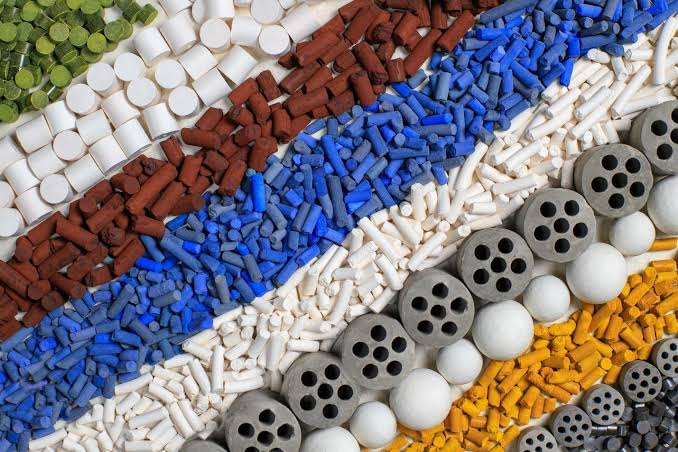
You must have paid attention to catalysts while studying chemistry and you know to some extent that you are faced with various types of this product during chemical reactions. Chemical reactions that require greater speed use catalysts. The existence and production of catalysts is one of the most important achievements of humans in the industrial and chemical industries, which has many applications.
The interesting thing is that various industrial and petrochemical catalysts are not consumed in chemical reactions, but can participate in the reaction sequentially. To carry out chemical reactions, a small amount of these products is needed. If you want to learn more about industrial and petrochemical catalysts, stay with us until the end.
The importance of the catalyst (the hidden diamond!)
As we have mentioned in other articles on the Nironamed website about the importance of oil purification , catalysts are also of great importance. In the past, the use of various industrial and petrochemical catalysts was not common and these products were not as famous as they are today, but over time, with the advancement of industries and the realization of the importance of catalysts, their use has become very common. It is interesting to know that without industrial catalysts, many vital products needed by humans would not be produced.
For this reason, many scientists are researching the production of various industrial and petrochemical catalysts in order to provide a new type of this product to various industries. This hidden diamond is a treasure that has many roles in various industries and processes.
The role of catalysts

These products change the reaction rate by changing the reaction direction, usually various industrial and petrochemical catalysts are used to increase and decrease the reaction rate. One of these reactions is the effect and reaction related to oil recycling , which is used to increase the speed and change its direction. If we want to explain it more conceptually, various industrial and petrochemical catalysts are used to break and rebuild chemical bonds between atoms in molecules of different elements or compounds.
In other words, catalysts encourage molecules to react more quickly. This usually causes the reaction to proceed more quickly and to complete sooner.
Classification of industrial catalysts
A significant amount of catalyst is manufactured every day around the world. The steps in manufacturing this product are very important and must be manufactured in a precise manner. Catalysts are placed in various categories, each of which has its own specific function. Depending on the method of manufacturing these products, their performance varies. Catalysts are divided into several categories, which we will introduce to you.
- Positive catalysts
These catalysts multiply the rate of a chemical reaction by reducing the barriers. The increase in rate by positive catalysts is so great that many molecules can be converted into products during the reaction. In fact, these catalysts are very effective in increasing the performance and efficiency of chemical products.
- Negative catalysts
For this reason, in chemistry, these catalysts are called negative catalysts, which slow down chemical reactions. In other words, these catalysts reduce the number of molecules participating in the reaction by increasing the activation energy barriers. This action slows down the reaction rate and, as a result, reduces the amount of products produced.
- Promoters
Chemists use a substance called a promoter or accelerator to increase the speed and activity of industrial catalysts. The goal of producing various types of industrial and petrochemical catalysts is to increase the rate of product production by increasing the speed of the reaction.
This is why catalytic engines or accelerators were built. For example, a mixture of potassium and aluminum oxides is used as a promoter in Haber chemical reactions. It is also important to know that many experiments and researches using various types of catalysts are related to distillation towers , which you can learn more about from these distillation columns.
- Catalyst inhibitor
There are products that work in the opposite way to accelerators; these are also called poisons. Poisons work by slowing down chemical reactions by inhibiting the activity of catalysts.
Types of industrial catalysts
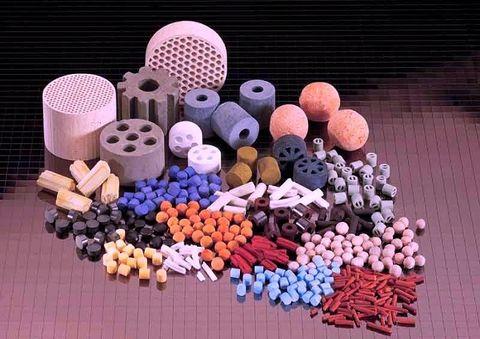
So far, you have become familiar with the classification and importance of these products, but you should know that these products are divided into four groups, each of which has its own characteristics. These industrial products can be placed in different groups according to their application. Now we will introduce you to the types of these industrial products.
- Heterogeneous
A heterogeneous catalyst is in the opposite phase of the reactants or products in a chemical reaction. Heterogeneous catalysts act in exactly the opposite way to homogeneous catalysts. The phases are distinguishable in solid, liquid, and gas states. In general, they are useful products because they increase the rate of reaction and product production without being consumed.
- Homogeneous
These products are in the same phase as the reactants in some chemical reactions that are used. These products are usually dissolved in the solvent with the substrates . For example, in reactions such as hydrosilylation, hydrocyanation, etc., homogenates are used to increase the reaction rate.
- Autocatalyst
In some chemical reactions, no product may be used to increase or decrease the rate of the reaction. In fact, one of the products of the reaction automatically acts as a catalyst. This product increases the rate of the reaction.
- Biology
This type of catalyst exists in the human body and affects biochemical reactions. Most of them have a protein structure. These catalysts have various names and types. Scientists have discovered these catalysts inside the bodies of living organisms and humans.
Petrochemical catalysts
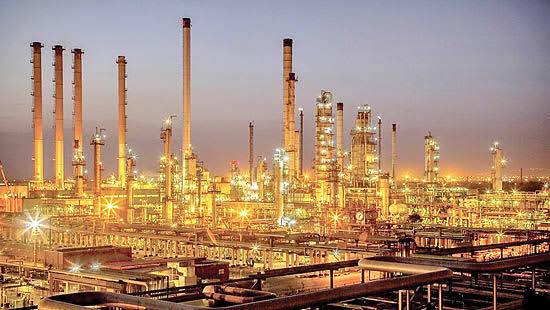
As we said, these products are used in various industries. Among the most important industries that use catalysts is petrochemical. Various types of industrial and petrochemical catalysts are widely used in this industry and have high efficiency. In fact, we can say that these products are one of the materials whose presence is necessary and essential in carrying out petrochemical reactions. These products are considered to be among the most key and widely used compounds for the operations of the oil, petrochemical, gas and chemical industries of various countries.
Given that catalysts play an important role in the production of various fuels and intermediate and final products, their importance is becoming more and more apparent and increasing in various industries. This has led scientists to try to discover more types of industrial and petrochemical catalysts that are more economically viable. It is also worth noting that different types of catalysts are used in various mini-refineries across the country.
It is interesting to know that most petrochemical complexes use different processes to convert hydrocarbon and natural gas streams into final products.
Petrochemical complex processes are divided into two categories: polymer and non-polymer. These products are used in both polymer and non-polymer processes. Non-polymer petrochemical catalysts include dehydrogenation, ethylene to ethylene oxide, dry reforming, aromatization, etc. Polymeric catalysts include antimony oxide, triethyleneamine, PMH, cobalt, etc.
Refinery catalysts
Oil refineries use various catalytic processes to convert incoming crude oil into final products such as LPG, gasoline, gas, kerosene, jet fuel, fuel oil, and other so-called specialty products. It is no secret that the more crude oil is converted into lighter products such as gasoline, the more diverse the processes required.
So, the catalyst consumption rate should increase its reactions. Usually, the refinery operating units are divided into two categories: lightening conversion units and quality units. In fact, each of these units uses different catalysts to increase its performance and efficiency.
For example, some of the products used in refineries include: Fluidized bed cracking, hydrocracking, and naphtha reforming are used for conversion processes in refineries. Hydrotreating is also used to produce products that meet bio-standards.
The difference between high-quality and low-quality industrial and petrochemical catalysts
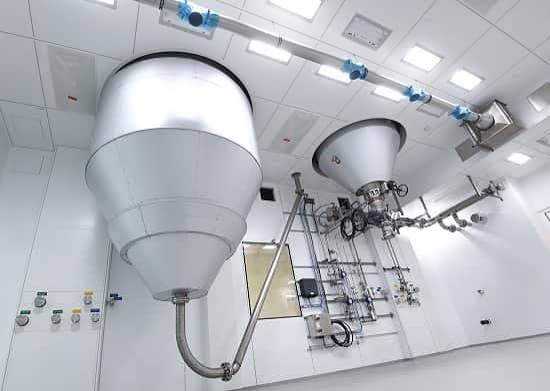
You should know that industrial and petrochemical catalysts are divided into two categories: high-quality and low-quality; but what factors determine whether a product is high-quality or low-quality? Now we will tell you how to distinguish high-quality industrial and petrochemical catalysts from low-quality ones.
- High-quality catalysts only allow the formation or non-formation of one product. Note that the production of several products reduces the quality of work in petrochemical and other industries. If you notice that the catalyst produces different products, know that you have chosen a poor-quality catalyst. In fact, in the presence of these products, only one product should be produced. In other words, the activity of this product should be completely specific.
- The speed of reactions performed by various industrial and petrochemical catalysts is very important. Depending on the type of catalyst, the speed of the reaction should be appropriate to your needs. It is better to use high-quality catalysts in various industries to increase work efficiency.
If you also want to learn more about oil production and its different types and increase your level of knowledge.
Final words
It is interesting to know that this product is also used for oil production. By using various industrial and petrochemical catalysts, high-quality oils can be produced. Among the complexes that supply refined and high-quality oils, etc., we can mention the Nironamed complex . If you intend to purchase various industrial oils and catalysts, you can visit the site of this complex.